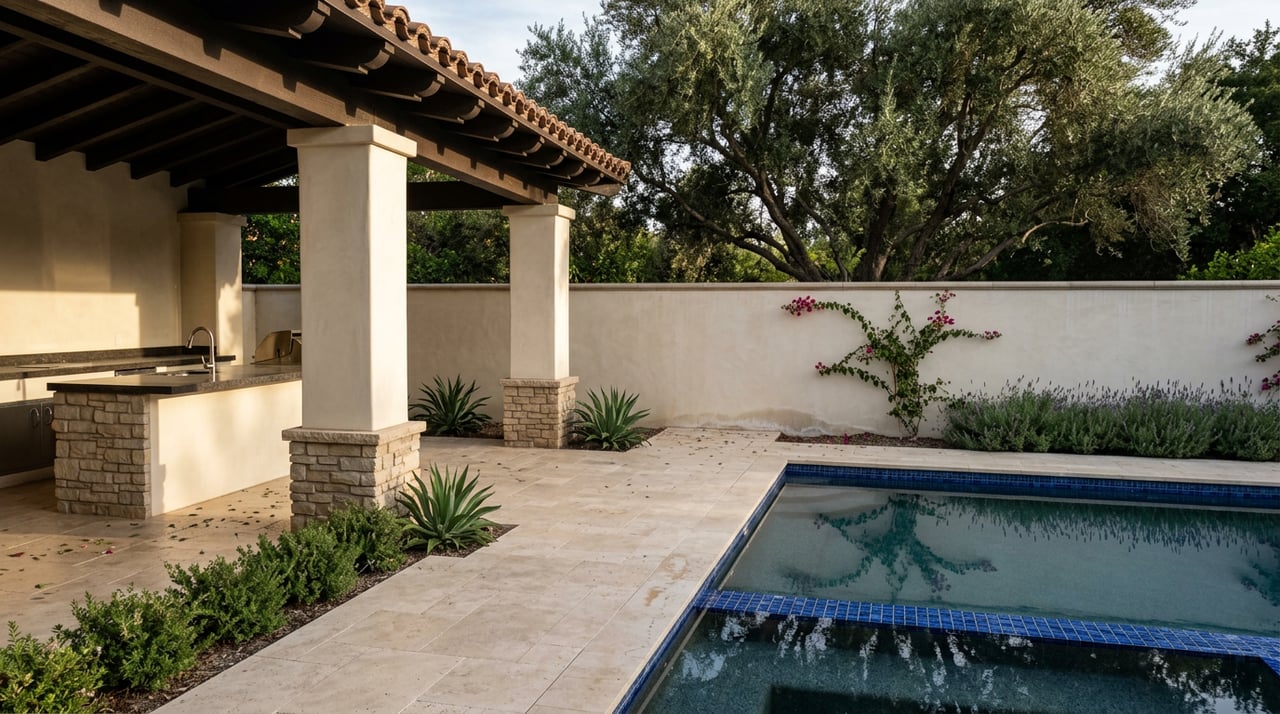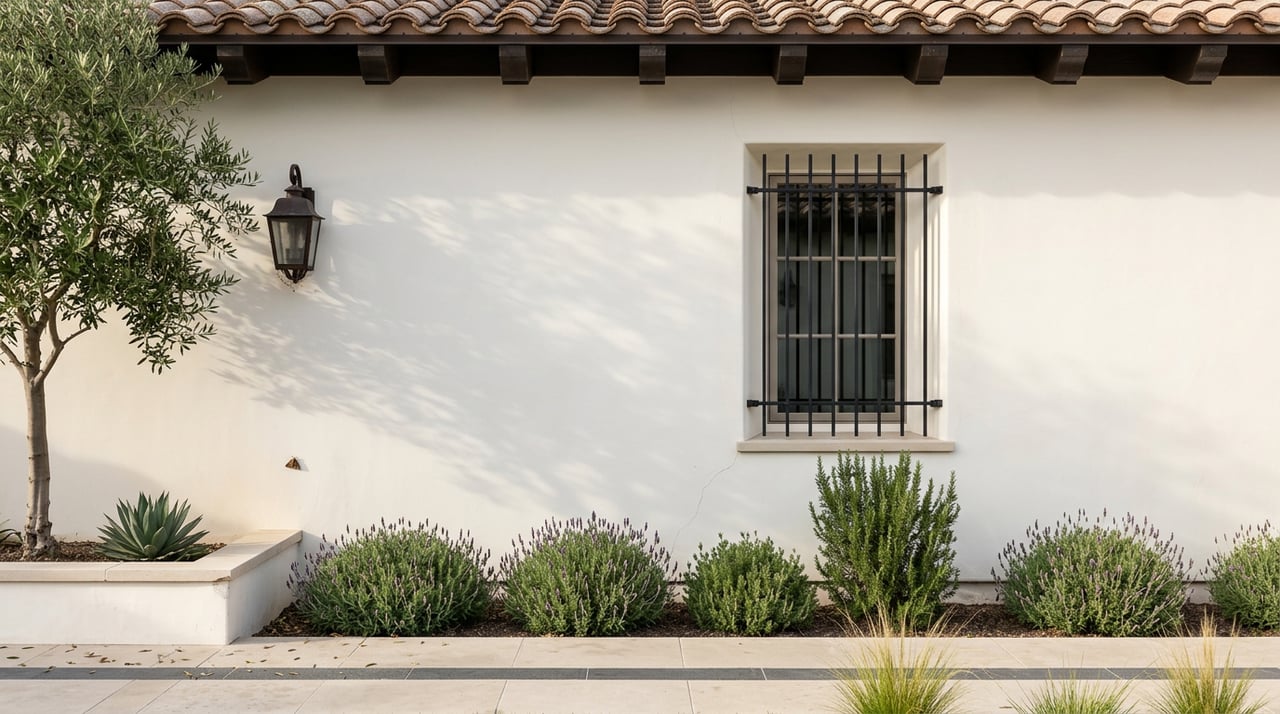
Picture the moment a buyer's inspector walks the property and pauses at the guesthouse, the sport court, the reworked driveway apron, or the trellised pergola over the pool. The buyer's agent asks a simple question: was that approved? The answer you thought was yes may only be half of yes. In the Covenant, "approved" means approved by two separate authorities, and if either one is missing, the problem lands in escrow at the worst possible time.
That is the thesis worth sitting with before you list. The Covenant sale is not a standard San Diego County transaction with a homeowners association bolted on. It is a two-track approval regime with its own paperwork, its own expiration clocks, and its own architectural taste, and every improvement on your lot is filed in both tracks or the file has a hole.
The Two-Permit Rule Nobody Tells You About Until Escrow
The Rancho Santa Fe Association administers the recorded Protective Covenant that runs with title, and its Art Jury reviews building applications to ensure projects maintain the "high artistic result" described in the Rancho Santa Fe Protective Covenant. That review sits alongside, not inside, San Diego County's permit process. As the RSFA architectural review page makes clear, approved County plans are submitted to the Association separately, and Association approval does not replace County permits or vice versa.
For a seller, that means every exterior improvement on the property should have two paper trails. The buyer's team will look for both.
| Improvement | County of San Diego | RSFA Art Jury |
|---|---|---|
| New home or major remodel | Building & grading permits | Style check + final approval |
| Pool, spa, or hardscape | Building permit | Design review |
| Guesthouse, ADU, casita | Building permit + state ADU rules | Design review |
| Barn, arena, paddocks | Grading + building permit | Design review |
| Fencing, gates, exterior color | Sometimes | Design review |
| Major landscape reshaping | Grading if applicable | Design review |
Reviewers weigh thoughtful siting, low-profile massing, restrained rooflines, natural materials, and landscape designs that integrate with the site while protecting views and privacy. That aesthetic bar is not decorative. It is the standard your buyer's architect will be measured against if they want to renovate after closing, which is why sophisticated Covenant buyers pull the file before they remove contingencies.
Why This Bites Harder in 2026
In a hot market, small paper gaps get papered over with a credit and a shrug. The 2026 Covenant market does not offer that cushion. Rancho Santa Fe home prices over the three months ending May 2026 came in at a median of $3.9M, with homes selling after 20 days on the market compared to 64 days last year, and only 13 recorded sales in May against 19 the prior year. By July 2026, median list prices in 92067 were running near $7.95M with roughly 84 active listings, per Altos Research, while broader Rancho Santa Fe list-price medians hovered around $5.07M with a median 134 days on market.
Read those numbers together and the picture is a thin, high-priced, patient-buyer market. A few large custom sales swing the medians, which is exactly why per-property comps and clean files matter more than the citywide number. When a buyer is writing an eight-figure check and taking four months to decide, they will find the unapproved pergola. They will read the assessment ledger. They will ask for the Art Jury correspondence file. In that setting, an unresolved approval is not a punch-list item. It is a repricing event.
The January 2026 Signal Sellers Should Read
Local buyers who follow Association politics know something changed at the start of the year. In early January, the RSF Post reported on a Board resolution that would allow Association-run projects to move through design review on a compressed schedule, creating what the piece described as one set of rules for members, a more flexible set of rules for the Association. Homeowner projects, importantly, still go through the full Art Jury review and appeal process.
Why does that matter to a seller? Because it tells informed buyers that Art Jury oversight of individual homes is not being loosened. If anything, the community conversation has sharpened attention on which projects were reviewed properly and which were not. Buyers reading local coverage are walking into showings with the question already loaded.
The Document Package That Prevents the Surprise
The single most useful thing a Covenant seller can do before listing is assemble the file the buyer's team is going to request anyway. Do it while you have leverage, not after the buyer's inspector has flagged something and the appraisal is pending.
- Recorded Protective Covenant and any amendments applicable to your parcel, pulled from the deed and preliminary title report.
- Prior Art Jury approvals for every improvement on the property, including style-check letters, final approval letters, and conditions of approval.
- County-stamped plans matching those approvals, showing perforations from County plan check.
- As-built drawings where the finished work deviated from the approved set, plus any subsequent Art Jury sign-off on the deviation.
- Assessment history from the Association and confirmation of the current dues rate, which is charged at roughly $0.14 per $100 of assessed value under the RSFA schedule.
- Violation and compliance history for the property, including any open notices.
- Reserve study, budget, and recent board minutes, which sophisticated buyers request under California common-interest community disclosure rules.
- Septic, well, and Santa Fe Irrigation District service confirmations, since wastewater varies by location within the Covenant and buyers underwrite these separately.
If a prior owner did unpermitted work, better to surface it in a pre-listing disclosure with a clear remediation path than to let the buyer discover it during their due diligence window.
Type I Architecture and Why the Buyer's Renovation Plans Matter to You
Much of the Covenant sits in what the Protective Covenant calls the Type I Architecture District, described as that distinctive type of architecture which for several decades has been successfully developing in California, deriving its chief inspiration directly or indirectly from Latin types. That standard has real teeth. In Dolan-King v. Rancho Santa Fe Association, a California appellate court upheld the Art Jury's authority to reject a homeowner's addition and fence designs on the grounds that the fenestration did not harmonize with the existing residence and the neighborhood.
The seller implication is subtle. Buyers who intend to modernize your property are pricing in Art Jury risk. If your listing includes clean prior approvals, drawings that read as Type I, and a lot layout that gives an architect room to work within the Guidelines, you widen your buyer pool. If your improvements look like they slipped through, buyers discount for the cleanup they will inherit.
Timing the Sale Around Approval Expirations
There is one more clock most sellers miss. Style-check approvals from the Art Jury can expire after six months, and final plan approvals may expire after one year if conditions are not met. If your property was on the market with a partial redesign in progress, or if the prior owner started a project and paused, those approvals may already be dead weight in the file. Refreshing them before listing is faster than refreshing them during a 30-day escrow.
For sellers planning a spring or early-summer listing, the calendar math is straightforward. Association review runs first-come, first-served and can stretch weeks to months depending on the queue. Any file cleanup you want reflected in the listing package needs to be in the Association's hands well before you sit down with a photographer.
FAQ
Do I have to disclose unapproved improvements even if the County signed off? Yes. California disclosure law and the Covenant both point in the same direction. If the work required Art Jury review and did not receive it, that is a material fact for a Covenant buyer, whose title will carry the same obligation.
Are non-Covenant properties in Rancho Santa Fe subject to the Art Jury? No. Properties inside gated sub-associations like Fairbanks Ranch, The Bridges, Cielo, and Del Mar Country Club sit outside the Protective Covenant and follow their own CC&Rs and design standards. Confirming Covenant status from the deed and legal description is the first step in any listing prep.
Can I sell without clearing an unapproved improvement? You can, but expect price impact. Sophisticated buyers will either request a credit sized to the remediation risk or ask you to complete the Art Jury process before closing, which often takes longer than the escrow period.
If you are considering a sale inside the Covenant and want a candid read on your file before it becomes an escrow question, Lisa Hadzicki works through the Association paperwork, the Art Jury history, and the pricing math with sellers well before the sign goes up. Let's talk about your next move.